Source Indoor Outdoor Artificial Plant Options for Home, Office, and Garden
Explore 30 listings for indoor outdoor artificial plant solutions suitable for residential, commercial, and public spaces. Compare features like lifelike appearance, eco-friendly plastic materials, and customization options to find the right decorative items for your needs; compare the available evidence and request quotations based on your requirements.
Key considerations
Products List




Comprehensive Sourcing Guide
Indoor Outdoor Artificial Plant Sourcing Guide
Buyers evaluating indoor and outdoor artificial plants must first distinguish between static decorative items and functional landscaping solutions. The observed market data indicates a strong presence of potted plants and branch arrangements designed for specific environments like restaurants, shops, and public spaces. Procurement teams should verify whether the listed product is intended for permanent indoor display or requires weather-resistant properties for exterior use, as the material composition often dictates this suitability.
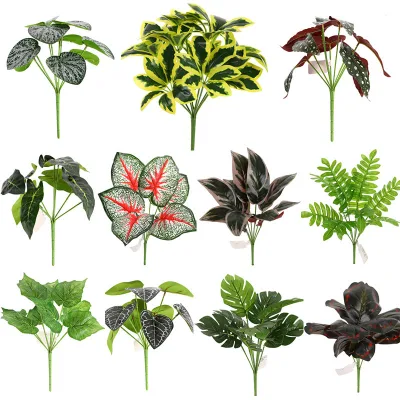
The product range includes diverse styles such as floral, bonsai, and artificial leather or fur textures, each serving different aesthetic goals. Sourcing decisions should prioritize the intended application environment, noting that some listings specify use in residences and commercial areas while others target public venues. Understanding these distinctions ensures the selected inventory aligns with the visual requirements of the target space without compromising on the durability needed for high-traffic or exposed locations.
Product Scope and Observed Listing Signals
The current market listings reveal a significant variation in product types, ranging from simple potted plants to complex branch arrangements with specific height standards. Buyers should note that observed models include specific dimensions like 60cm, 80cm, and up to 180cm, which directly impacts shipping costs and display feasibility. It is critical to confirm the exact size standard for each order, as the "customized" nature of some listings requires precise measurement verification before production begins.
Material composition is another key signal, with plastic and PE materials being the primary components for leaves, rods, and handles. While some products emphasize eco-friendly attributes, the core construction relies on synthetic polymers that offer longevity and ease of maintenance. Procurement teams must scrutinize the specific material claims to ensure they match the intended use case, particularly when selecting items for areas requiring frequent cleaning or exposure to varying light conditions.
Technical Specifications to Verify
Dimensional accuracy is paramount when sourcing artificial plants, as the listed standards vary from fixed lengths to fully customizable options. Buyers must explicitly confirm the final height and width specifications, especially for models like the 157043 or PT034-Dense, to ensure they fit the designated display area. The presence of multiple size options suggests that customization is a viable path, but this requires clear communication of the exact measurements to avoid discrepancies in the final delivered goods.
Surface treatment and processing methods also require strict verification to ensure the desired aesthetic outcome. Listings indicate that printing processes are used for logos and that weaving techniques are applied to create realistic textures. Sourcing teams should request samples to validate the quality of the printing and the structural integrity of the woven elements, ensuring that the "lifelike" and "elegant" features claimed in the product descriptions are physically present in the finished units.
Compliance and Safety Documentation
While specific certification data is not universally present in the provided listings, buyers must proactively request safety documentation for all artificial plant orders. The absence of explicit ISO 9001 or CE certification in the observed data means that compliance cannot be assumed and must be verified through direct supplier inquiry. Procurement teams should demand proof of material safety, particularly regarding the plastic and PE components, to ensure they meet the fire safety and toxicity standards required for commercial and public installations.
Environmental claims regarding eco-friendly materials require substantiation through third-party testing or supplier declarations. Although some product attributes mention eco-friendly qualities, these statements should be treated as observations rather than guaranteed facts without supporting documentation. Buyers should establish a requirement for material safety data sheets or environmental compliance certificates to mitigate risks associated with indoor air quality and long-term environmental impact, especially for products destined for schools or healthcare facilities.
Cost Drivers and Commercial Terms
Pricing in this category is influenced heavily by customization levels, material quality, and order volume, with observed MOQs ranging from 300 to 720 pieces. Buyers should anticipate that lower minimum order quantities may come with higher unit costs, while larger orders could leverage factory-direct pricing advantages. It is essential to negotiate based on the specific model and customization requirements, as the "low MOQ" advantage mentioned in some listings may not apply to all product variants or complex design requests.
Packaging and logistics represent significant cost factors that vary by product type and destination. The standard packaging often involves master cartons with inner boxes, but specific requirements for export or fragile handling may incur additional charges. Procurement teams must clarify the packing specifications, such as the use of cartons for protection, and factor these into the total landed cost to ensure the budget accommodates both the product price and the necessary shipping and handling expenses.
Supplier Qualification and Quality Control
Supplier qualification should focus on their ability to deliver consistent quality across customized orders, given the observed variation in product models and styles. Buyers must assess the supplier's capacity to maintain the "lifelike" and "beautiful" attributes across large batches, as these subjective qualities can vary significantly between production runs. Establishing a clear quality control protocol that includes pre-shipment inspections is crucial to ensure that the final products meet the agreed-upon aesthetic and structural standards.
Quality control processes should also address the durability of the materials used, particularly for items intended for high-traffic or outdoor environments. Since the products are made of plastic and PE, verifying the resistance to fading, tearing, and weathering is essential for long-term satisfaction. Buyers should request evidence of past performance or test results related to material durability to confirm that the supplier can consistently deliver products that withstand the intended usage conditions without premature degradation.
Long-Term Procurement Checks
Sustaining a successful procurement relationship requires regular monitoring of product consistency and supplier responsiveness over time. Buyers should implement a schedule for periodic quality audits to ensure that the "evergreen" and "tranquilizing" features remain consistent with the initial samples. This ongoing verification helps prevent drift in product quality and ensures that the supplier continues to meet the specific needs of the buyer's evolving inventory requirements.
Future procurement strategies should also account for potential changes in material availability and regulatory landscapes. As environmental standards evolve, buyers must stay informed about new regulations affecting plastic and synthetic materials to ensure continued compliance. Maintaining open communication with suppliers regarding these changes allows for proactive adjustments to the product mix, ensuring that the artificial plant inventory remains compliant, cost-effective, and aligned with market trends.
FAQs
How do I choose the right size for indoor outdoor artificial plants?
Start by measuring the floor, table, or corner space where the plant will sit, then pick a height that leaves visual breathing room. Listed options include branches at 65cm and taller pieces at 60cm, 80cm, 120cm, 150cm, and 180cm. Customized sizes are also available from many suppliers, so confirm your required dimensions before ordering.
What materials are commonly used for indoor outdoor artificial plants?
Most artificial potted plants and branches are made from plastic, including PE, because it is lightweight, easy to clean, and holds color well. Plastic rods form stems while leaves are molded or woven onto handles. Quality listings describe the material as eco-friendly with natural coloring, so request material details from each supplier before placing a bulk order.
Can artificial plants be customized with my own logo and packaging?
Yes, customization is generally available. Many suppliers offer customized logos, customized sizes, and master carton packaging with inner boxes. Logo printing may be optional, so confirm whether your order includes branding or ships without printing. Customization usually applies from a defined minimum order quantity, so discuss artwork files, print placement, and carton labels before confirming production.
What is a typical minimum order quantity for artificial plants?
Minimum order quantities vary by product and supplier. Listed values range from as low as 1 piece for sample-friendly items up to 720 or 1000 pieces for bulk production runs, with some listings starting at 300 pieces. If you want to test the market first, ask suppliers which items support low MOQ or trial orders.
Which spaces suit artificial potted plants and floral decorations?
Artificial potted plants work well in residences, commercial spaces, gardens, shops, and restaurants, and they suit flower arrangements with wood elements. Because they are evergreen and require no watering, they stay attractive in low-light or high-traffic areas. Their lifelike, elegant styling makes them suitable for both indoor decor and covered outdoor placements that avoid direct harsh weather.
How are artificial plants packaged for shipping?
Most products are packaged in cartons, often as master cartons with inner boxes to protect stems and leaves during transit. Carton packing keeps freight costs reasonable and simplifies pallet loading. Before ordering, confirm carton dimensions, pieces per carton, and gross weight so you can calculate freight charges and warehouse space accurately for your shipment.
What maintenance do indoor outdoor artificial plants require?
Maintenance is minimal. Dust leaves and stems regularly with a soft cloth or use a gentle air blower, and wash with mild water when needed. Key features include easy maintenance and easy cleaning, with evergreen appearance year-round. For outdoor use, place plants where they avoid prolonged direct sunlight and heavy rain to preserve color and shape longer.
Where are most artificial plants sourced from?
Many artificial potted plants and branches are produced in China, with Shandong among the listed origins. Sourcing from factory-direct suppliers often brings reasonable prices and flexible order quantities. When comparing options, review each supplier's location, production capacity, and customization capability, since these factors affect lead time, communication, and total landed cost for your market.